THE DUTCH ID THAT DIDN'T GET BOUNCED AT VERIFICATION
The client came in with no small talk. One message – full profile: name, date of birth, Dutch citizenship, place of birth, height, hair and eye colour. Then a photo, and his signature as a separate PNG. He clarified one thing only: both sides needed.
What we had to build:
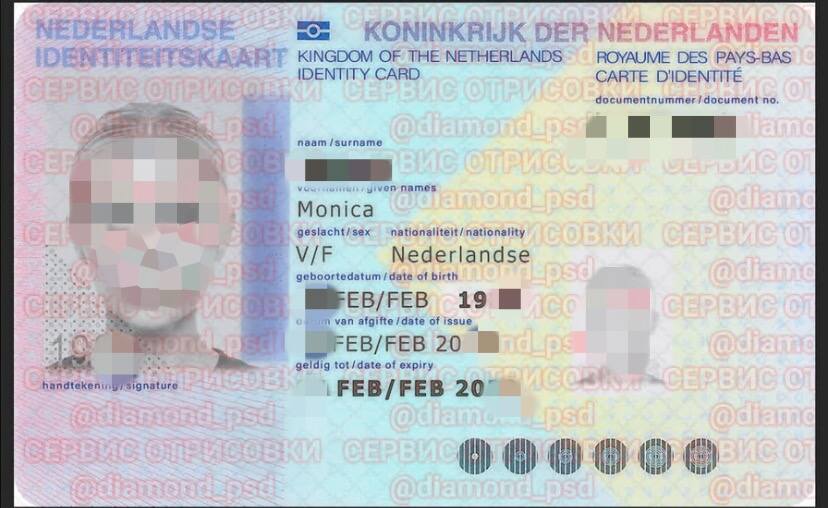
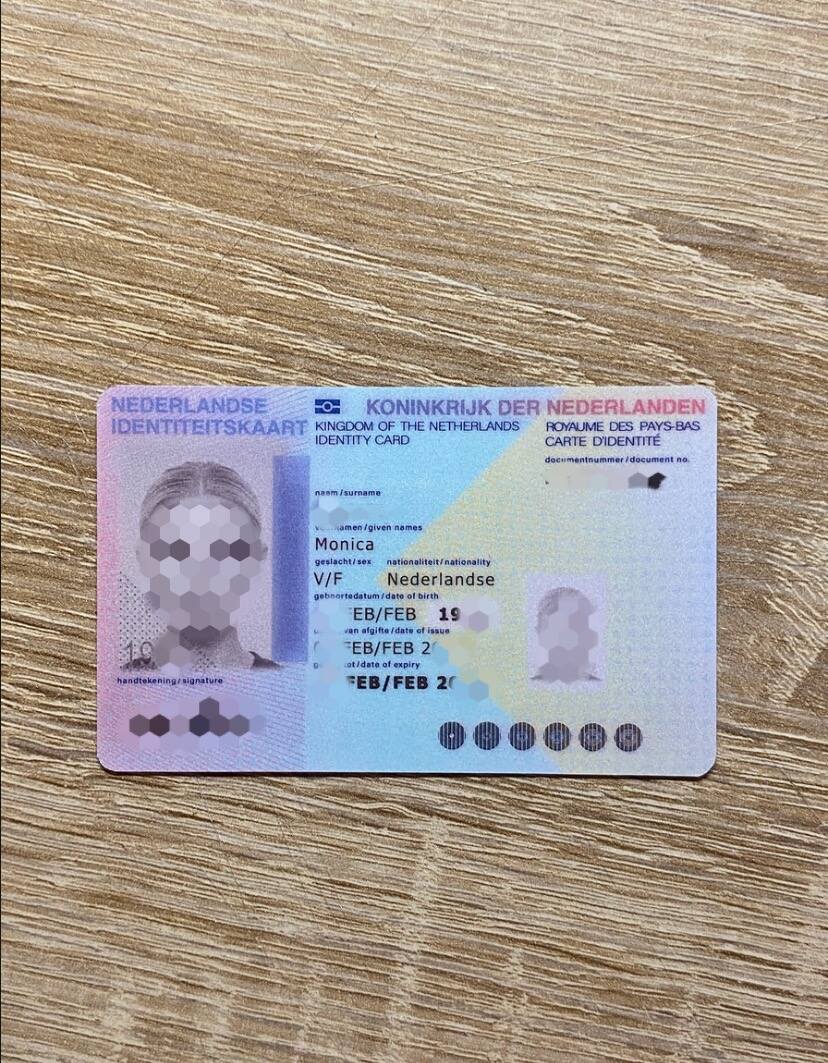
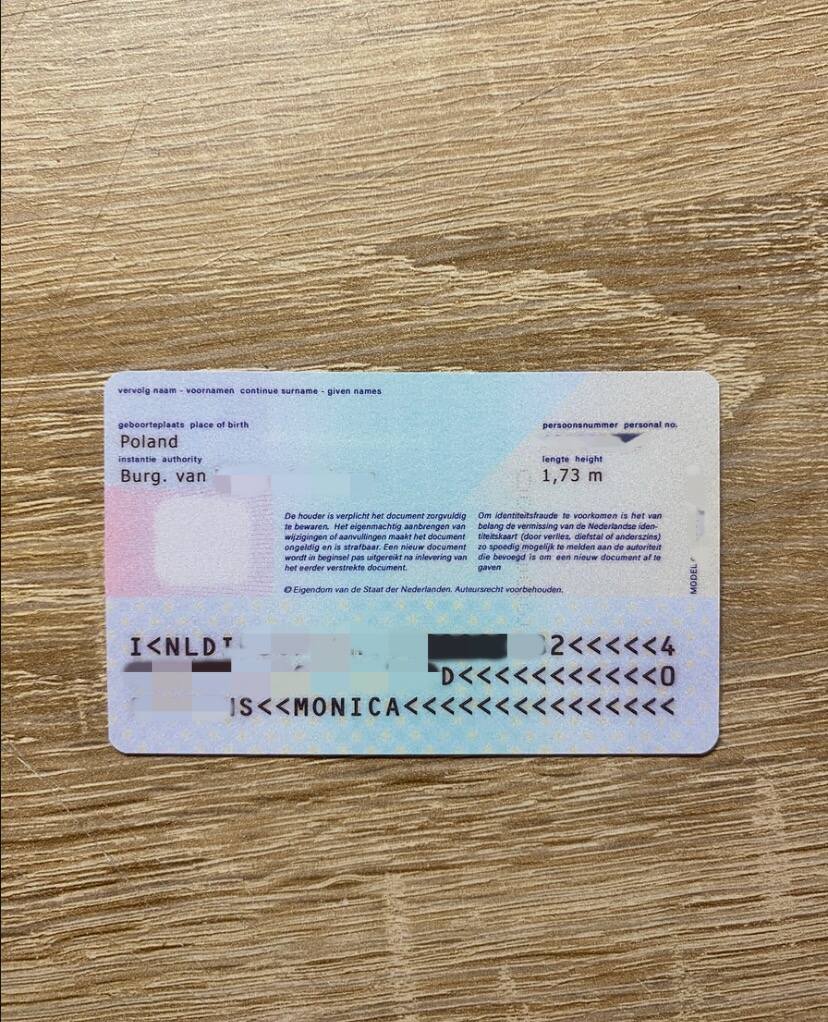
NEDERLANDSE IDENTITEITSKAART to the current template – front and back, not a pretty picture that "looks kind of like it"
the portrait rebuilt to biometric spec: lighting, background, head position, gaze – plus the ghost image on the side, exactly like the original
document number, issue and expiry dates aligned so that validity period, age and series don't contradict each other
his own signature placed into the handtekening field as live ink, not a flat black vector
the back with the MRZ – the machine-readable zone where every character counts, check digits included. This is where 9 out of 10 "editors" fail
Both files delivered the same day. No delays, no "tomorrow evening".
A Dutch ID isn't about a pretty layout. It's about the front and back being the same document: one date, one number, one signature, one person. A broken MRZ check digit burns the whole order, even if the front is flawless. We calculate it by hand, not by eye.
12 HOURS ONLY: ?10% on your first order. After that the offer closes.
Need an ID for your verification – one side or both?
Message us. We'll go through the details and deliver files that hold together.
{all data published with the client's consent}
- Telegram: @diamond_otrisovka_new ( https:// t.me/ diamond_otrisovka_new )
- Telegram BOT: @diamond_masterbot ( https:// t.me/ diamond_masterbot )
- Diamond Service – info channel: Diamond Service ( https:// t.me/ +ktgawxE_I5A1YjYy )
- PerfectumSupport publishes news and promotions. Messages are not read; orders are accepted only via the contacts above.
#redraw #netherlands #id #photoshop #case


 Reply With Quote
 The logic feels solid: a scanner gives you flat, sharp, distortion-free output. That very flatness is what condemns the file.
 Verification looks for signs of handheld capture: slight perspective, natural tilt, uneven depth of field, a soft shadow along the document edge, a hologram responding to angle. A flat scan delivers none of it.
 On top of that, scanner glass lays an even band of light across the laminate, and perpendicular illumination kills the hologram entirely. The document becomes a perfectly flat object – in other words, a printout.
 A phone gives volume, micro-tilt and live light physics. That's exactly what proves the document physically exists.
 We work with both file types, but we know where a scan is contraindicated.
 Scanned it and got rejected? Send the file – we'll rebuild it around the logic verification expects.